The most accurate size and fit advisor for fashion brands
We combine customized AI algorithms, SKU data, and consumer preferences to deliver accurate size and fit recommendations.
Let’s talkThe solution of choice for the world's most demanding brands
































Customers pick sizes differently
We cater to all sizing needs with multiple solutions in our Size Hub: everything your customers need to know about your product’s sizing in one place
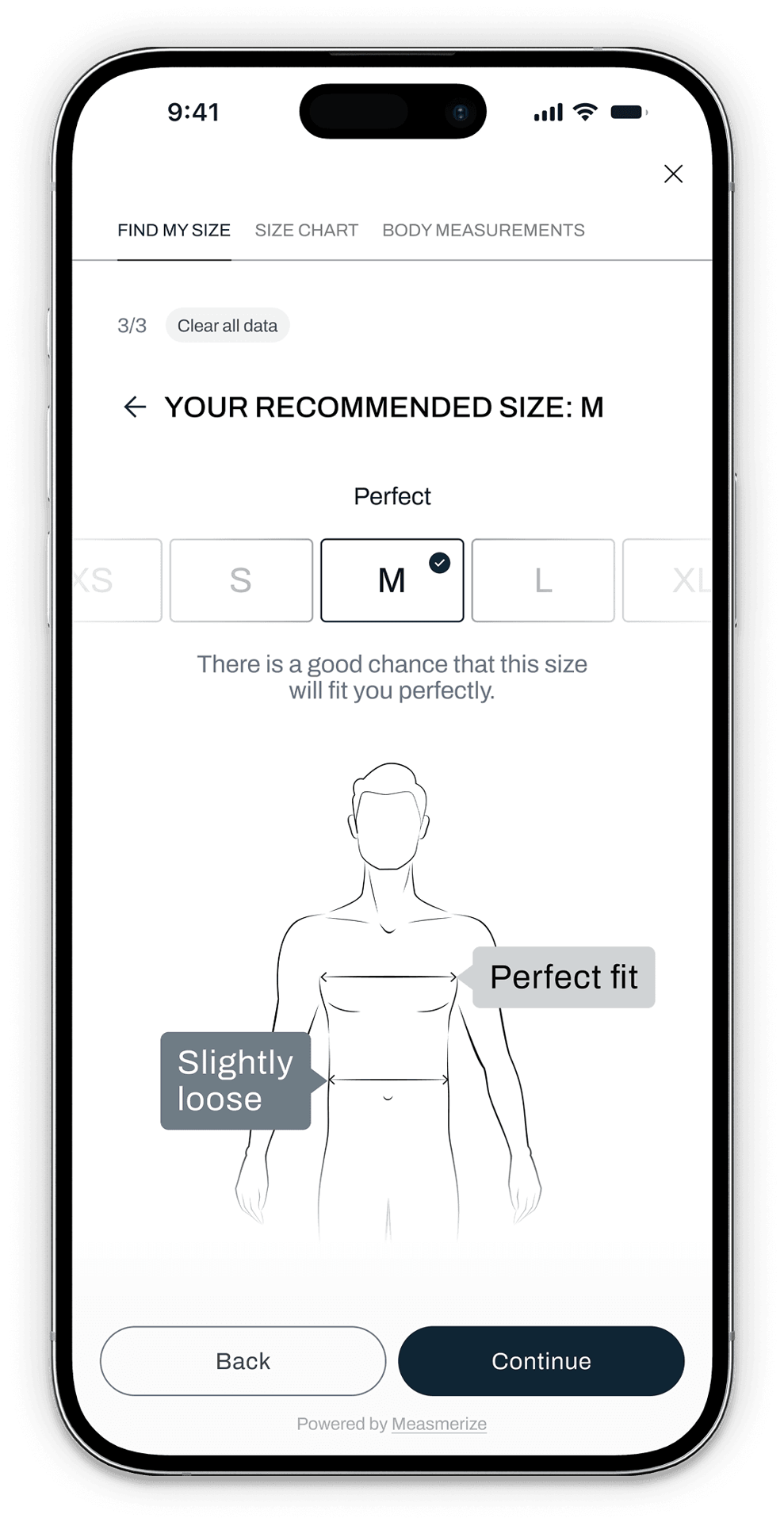
Size Advisor - Quick recommendation
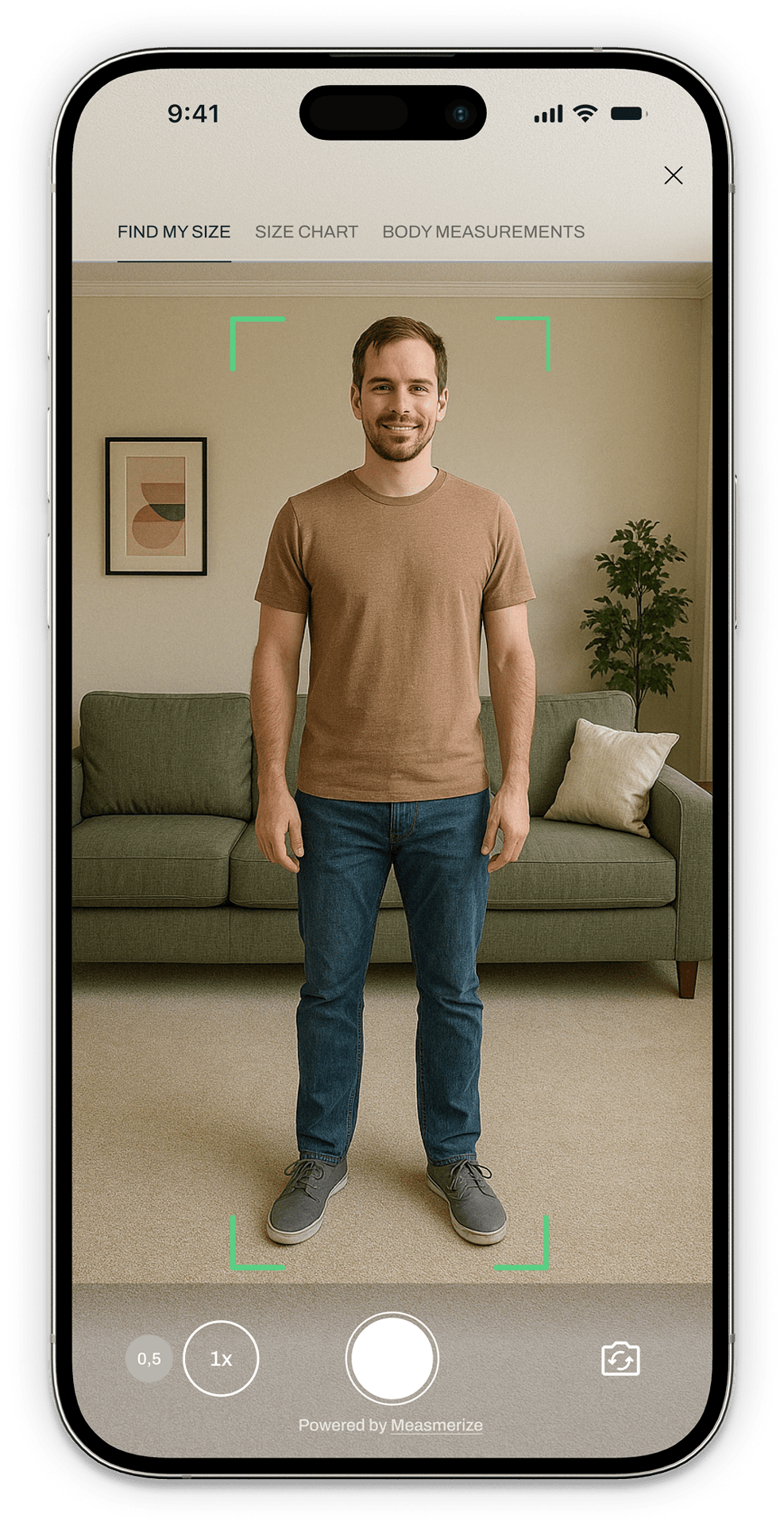
Size Advisor - Optional body scan
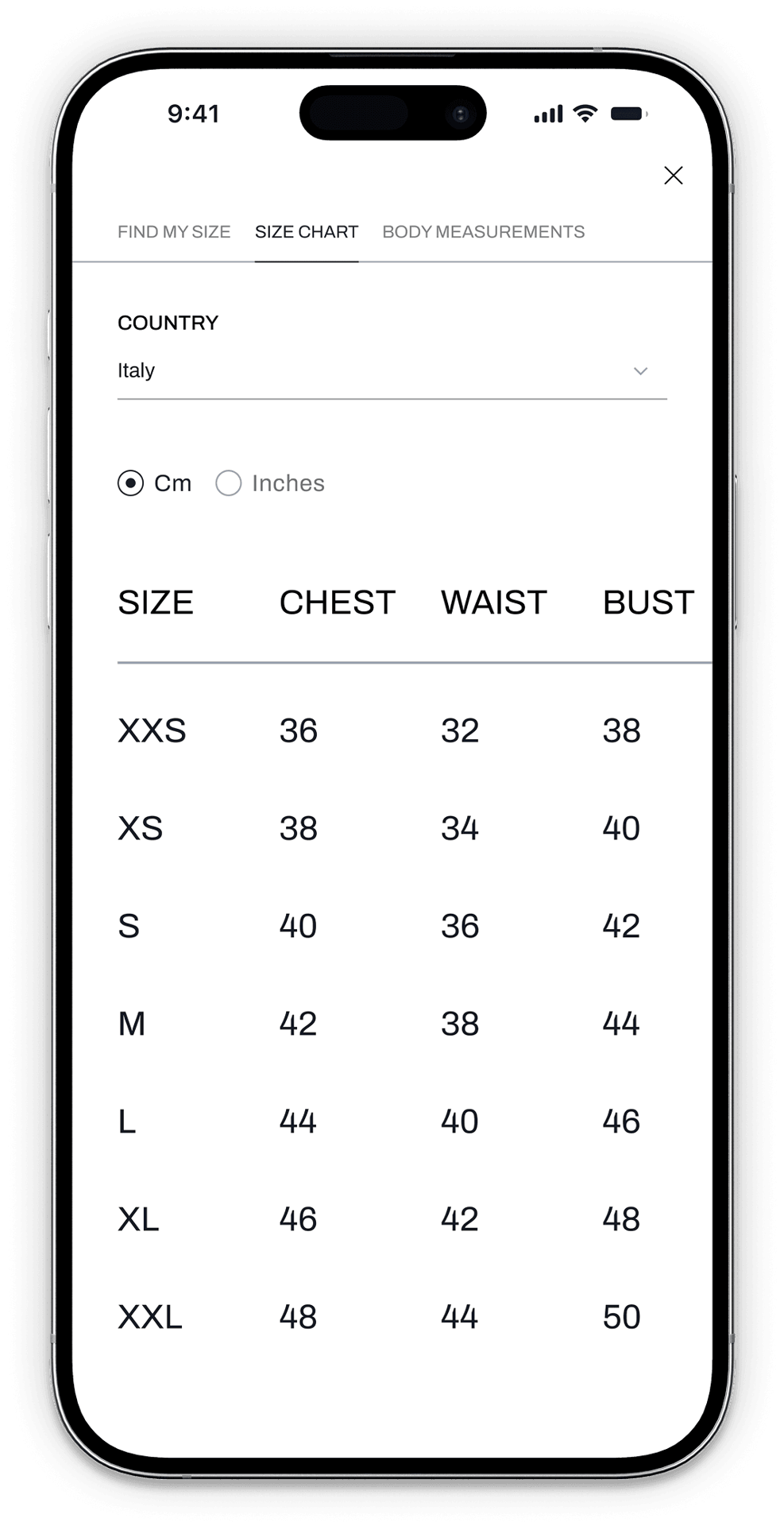
Smart Size Chart
Why our customers choose us
Improve your e-commerce P&L: lower size & fit returns and higher sales

Accurate from Day 1
We tailor our size recommendations based on the individual consumer's body and the specific SKU they're browsing, even with limited sales data.

Respecting brand's DNA
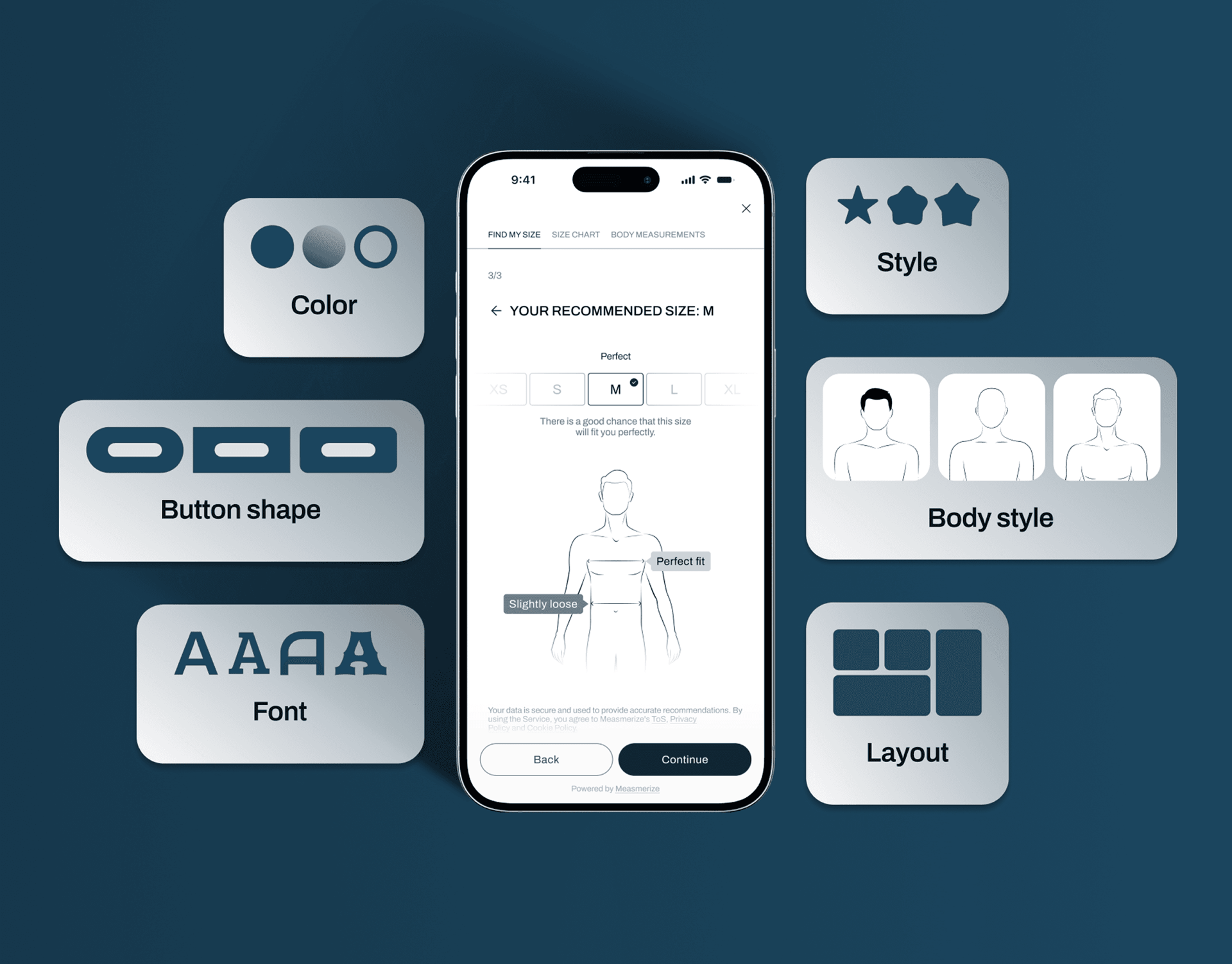
The look & feel of our solutions are completely customizable to fit seamlessly within your brand's online experience.

Peace of mind - Globally
Worldwide privacy compliance - including EU, USA and China. Highest Accessibility (WCAG) standards. A secure, globally scalable infrastructure.


Affordable Velvet Glove Service
We understand every retailer is different. We align our processes and algorithms to individual brands, minimizing operational impact and maximizing RoI.

Fast and easy to integrate
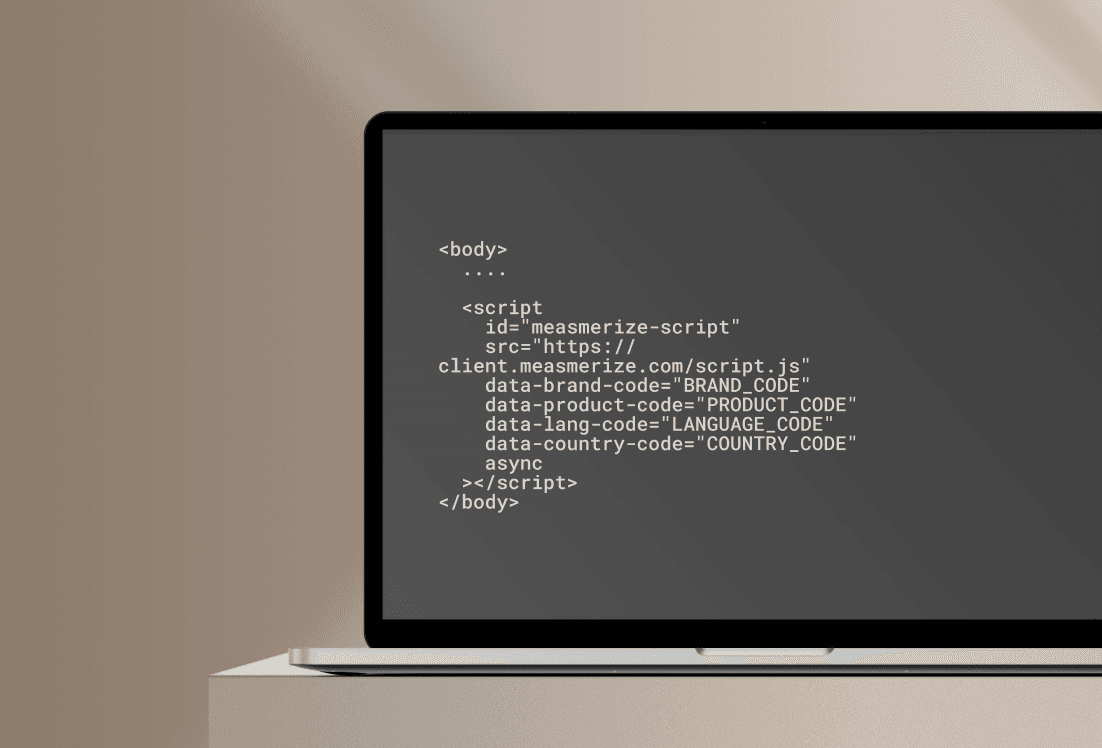
You're just a few lines of JavaScript away from your first size recommendation. We do the heavy lifting during onboarding to minimize operational impact.

Personalized reporting
We support our customers beyond the simple contractual agreements, helping the decision-making with data from millions of users and ad-hoc analysis.

State of the art Artificial Intelligence
We have been selected to be part of the 2025 class for Google for Startups AI Accelerator. Out of >1000 applications, only 15 companies across all sectors were chosen.
The program supports select growth-stage companies with tailored mentorship, the best of Google products, and best practices to support technical, product, and business problem solving.
Shoppers around the world buy more and return less with Measmerize
- +40-70%
Conversion Rate of Measmerize users vs. traditional size chart
- +10-15%
Average Order Value of Measmerize users vs. traditional
- -40%
Return Rate of users who follow Measmerize recommendation
- 15-25%
Portion of total sales based on Measmerize recommendations
Multiple categories covered
A single integration

Help your customers buy more and return less by solving online sizing once and for all
Get in touch to learn how Measmerize can support your business needs
FAQs
A Size Advisor is an interactive tool on a product page that returns a personalized size recommendation, without asking the shopper to measure themselves. It is one of three types of ecommerce fit technology. A Size Guide is a static reference chart with no personalization. Virtual Try On shows how a garment would look on the shopper's body, which answers a style question. Only a Size Advisor answers which size to order. The category is not new: Size Advisors have been evolving since the 2010s.
Size Advisors take one of three approaches. Pure Machine Learning clusters shoppers by demographics and purchase behavior and recommends what similar shoppers kept. It needs no garment data and adopts well, which suits multibrand retailers, but it restarts at zero for every new product. Body Scanning measures the shopper by camera or LiDAR and can be accurate when scan quality is good, though its adoption friction means it tends to reach shoppers who have already decided to buy. Digital Twin estimates measurements from a questionnaire and compares them against garment measurements, so it is accurate from day one, and it requires the retailer to supply garment data.
Accuracy depends on what the recommendation is compared against, so the useful question to a vendor is what their number measures. Ask whether the comparison is shoppers who followed a recommendation against those who did not, whether it is isolated from adoption rate, and whether conversion is measured by product page to add to cart or product page to order. A tool that infers fit from purchase outcomes cannot tell a shopper where a garment will be tight, because the recommendation never passes through a comparison of body and garment measurements.
Integration is a few lines of JavaScript on the product page. The work sits either side of it: supplying product measurements or size charts, and the customization that aligns the widget and its call to action with the brand's design. Measmerize runs as an enterprise integration or as a Shopify no-code plug-in.
A Digital Twin approach needs garment measurements or the anthropometric size chart each product was developed against, per product rather than one chart per gender. As a nice-to-have, we also use historic sales & returns data, and further product attributes (intended fit, category, fabric, …). Pure Machine Learning approaches need none of this, which is why they suit multibrand retailers without product data infrastructure.
All three, on a single integration. The questionnaire differs by category, because the inputs that predict fit differ. Apparel uses gender, age, weight, height, and bra size for womenswear. Footwear uses gender, country of origin, the first shoe size a shopper would try in a boutique, and foot width.
The larger commercial effect is upstream of returns. 52% of shoppers hesitate to complete a purchase when unsure about fit, and 58% say they prefer to buy from brands whose sizing they already know. Those are sales that never appear in a returns report, because the shopper simply leaves. Recent A/B tests show conversion rate uplifts of +7.5% to 26%.. Returns reduction follows as a downstream result, scoped to size and fit returns among shoppers who used the tool.
Yes, and this is the practical difference between the approaches. A recommendation built from garment measurements does not need accumulated sales and returns history to make its first recommendation. Sales and returns data then fine-tunes it over time through a Machine Learning feedback loop. An approach that starts from purchase history alone needs that history to exist first.
**Four questions filter most of the field. **
How does your system work when a product has zero purchase history? What exactly is your KPI based on? Does the tool still load when a shopper refuses all cookies? What product data do you need from us, and in what format?
Measmerize operates under EU, USA, China and all major country’s privacy regimes, with external legal review and WCAG accessibility standards. The detail worth testing in any vendor is cookie consent handling: the tool should read a shopper's consent choice through the site's cookie wall and adjust what it stores, rather than disappearing entirely for shoppers who decline.